Taj Mahal quartzite: the look of marble with the strength of quartzite
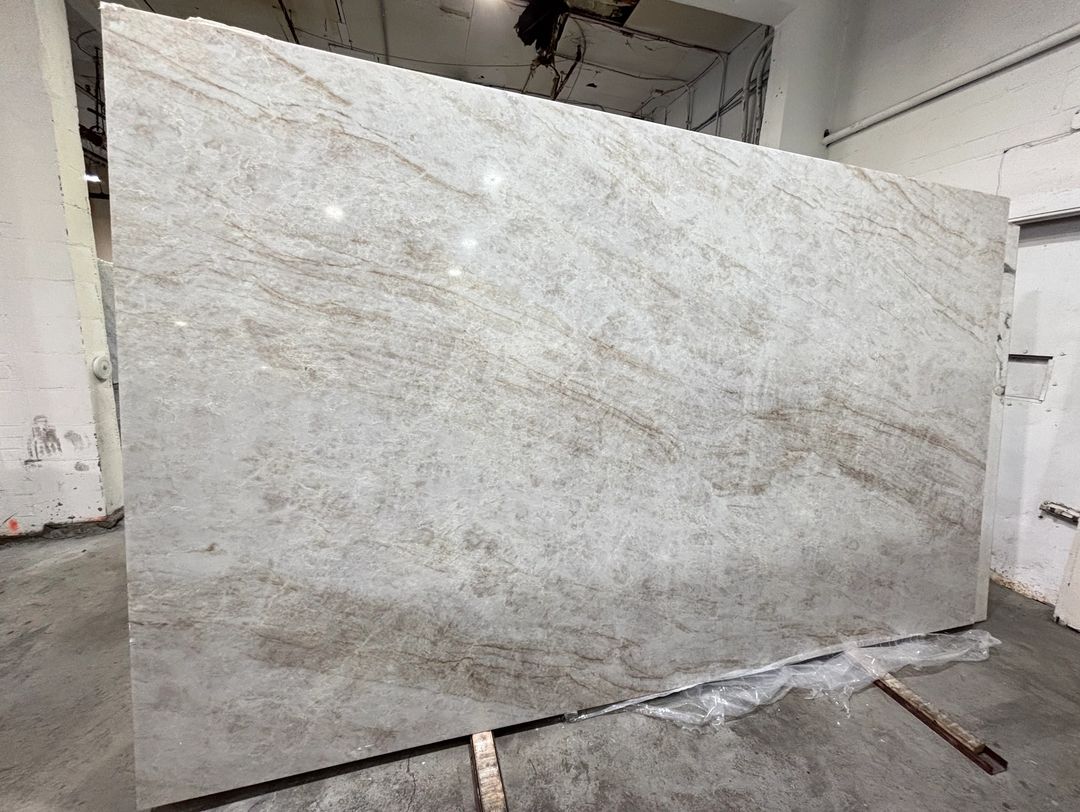
Taj Mahal is a Brazilian quartzite with a warm white to soft beige background and fine gold and taupe veining. It is one of the stones clients ask for most, because it reads like marble and behaves much more like granite.
Quartzite is a natural stone, harder than granite and far more resistant than marble to the etching that lemon juice, wine, and vinegar cause. That makes Taj Mahal a practical choice for a kitchen that is cooked in every day. Like any natural stone it should be sealed, and it handles hot pans better than engineered quartz.
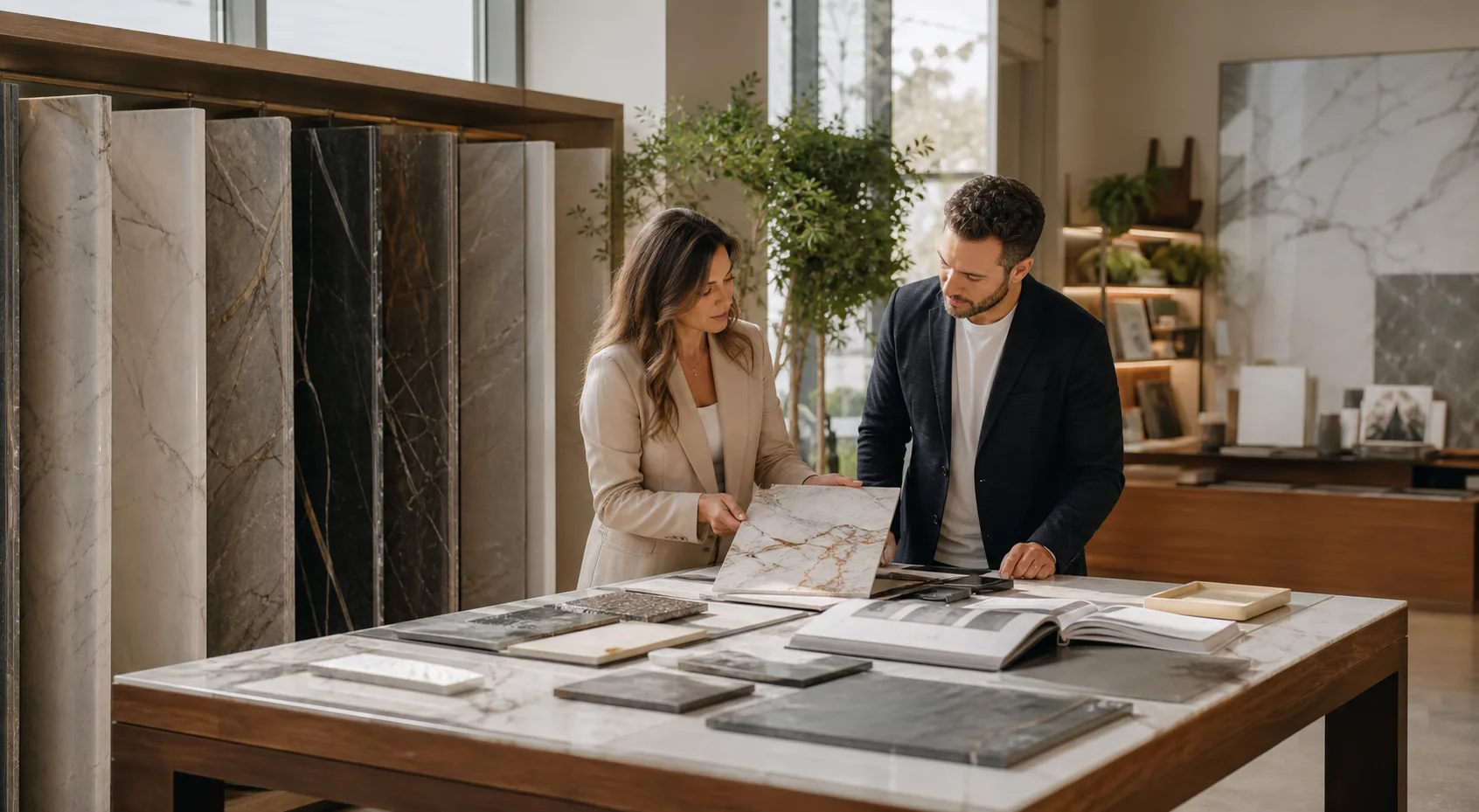
No two Taj Mahal slabs match. Some are quiet and creamy, others carry stronger gold movement, and the tone shifts from lot to lot. That is the reason to choose it in person: visit our indoor slab yard at 50 Central Drive in Farmingdale, compare the slabs side by side, and reserve the one you want. Check the inventory page or call for the lots currently in stock, since availability changes.
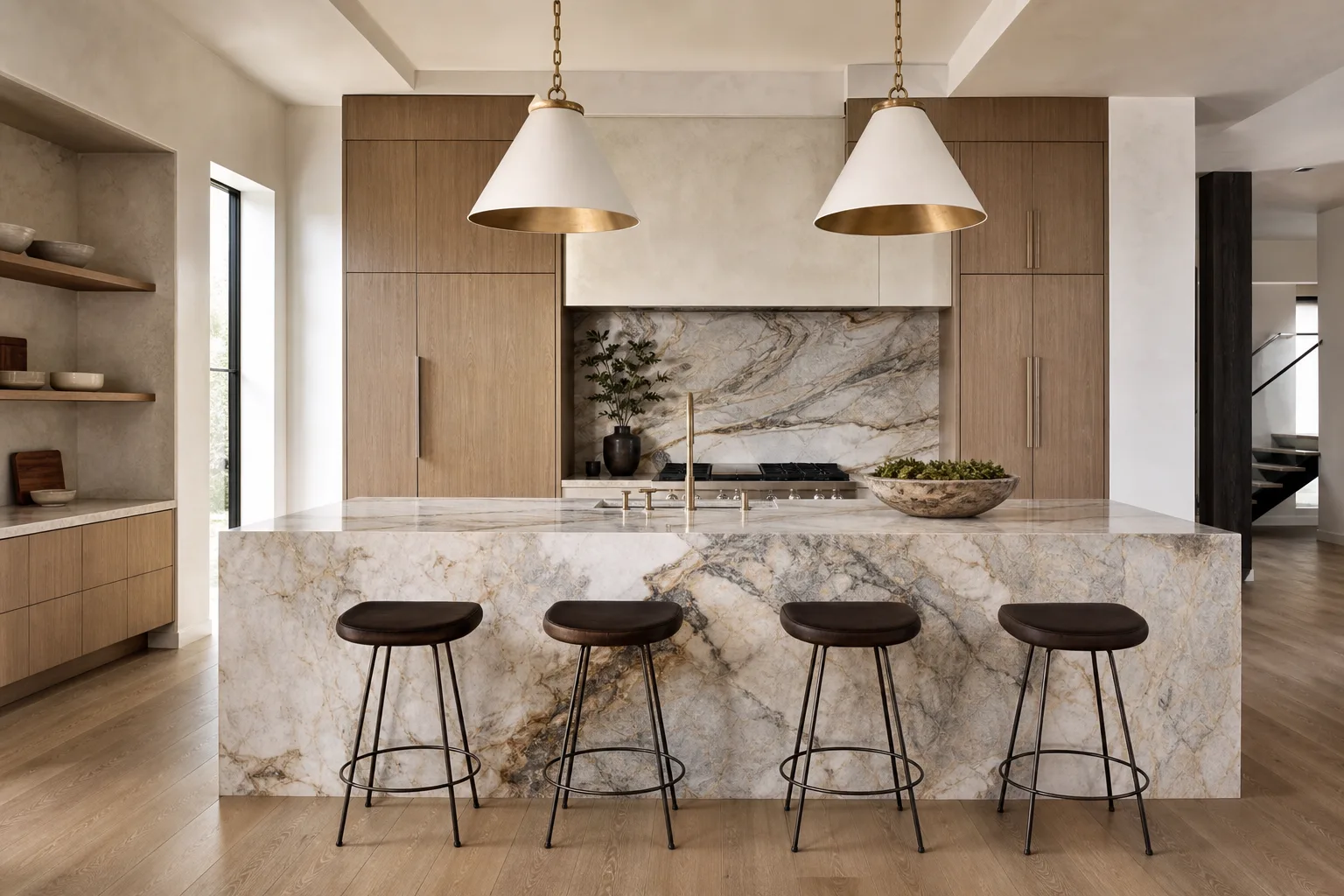
Taj Mahal is commonly finished polished, honed, or leathered, and works for islands, perimeter counters, full-height backsplashes, vanities, and fireplace surrounds. If the budget or the application calls for an engineered surface, we also carry a printed quartz in a Taj Mahal pattern. Other options are on the quartzite countertops page.
Marble Look, Less Worry
Taj Mahal resists etching and scratching far better than marble, while keeping the soft veined appearance.
Choose the Exact Slab
Color and movement vary between lots, so the slab you reserve is the one that gets fabricated.
- Full Taj Mahal quartzite slabs to compare in person, not small samples
- Layout planned around the veining before anything is cut
- Fabrication and installation coordinated for kitchens, vanities, and feature walls
- Projects served across Long Island and all five NYC boroughs